This post will have affiliate links when I get those up and running, but does not yet.
This series initially started with What to Do when your Home Kitchen Skills Plateau, and it’s time for another set of updates. I have now completed the Sourdough chapter in the baking book I’m working through. And after a few months spent working on it, I have also completed the Bourbon chapter in Raising the Bar: A Bottle-By-Bottle Guide to Mixing Masterful Cocktails at Home. And yes, I do still recommend that whole approach to learning kitchen skills!
For those new to this series, I started a series of kitchen challenges working through baking, cooking, and making cocktails to improve my skills and methodically learn new techniques. I do not recommend this approach to everyone, but for others at a skill plateau I highly recommend it.
Bourbon
The authors of Raising the Bar suggest a bottle of bourbon as your first liquor. The reasons they point to for bourbon include the ability to drink it neat, on the rocks, or in a cocktail, and its use in an Old-Fashioned. (My only complaint is that I had to go to the liquor store to buy a bottle…) Minor personal inconvenience aside, this marks the start of a beautifully structured instructional text.
Following the introductory text’s classic cocktail structures section, the first drink is an Old-Fashioned. I made several working through this chapter, and none of them quite satisfied me, but later recipes proved far more to my taste. Still following the classic cocktail structures, the next drink is a Whiskey Sour, and I will stick with the recipe from this book. Later recipes modify those structures and explicitly call out those modifications. The Buster Brown, with the structure of a Whiskey Sour, leapt out to me as one of my new favorite drinks to make at home.
Beyond the modifications suggested in the recipes, the text invites improvisations of one’s own. I played around with a variation of the Expat using pineapple juice that suited my tastes far better than the original. When it comes to seasonal recipes, too, the Hot Toddy and Mint Julep recipes provide plenty of room for experimentation. I say provide because I have not yet had the chance to mess around with those formulae yet. Working through this book is not a quick process with how few drinks I make, but I am enjoying what I’m learning all the same.
Sourdough
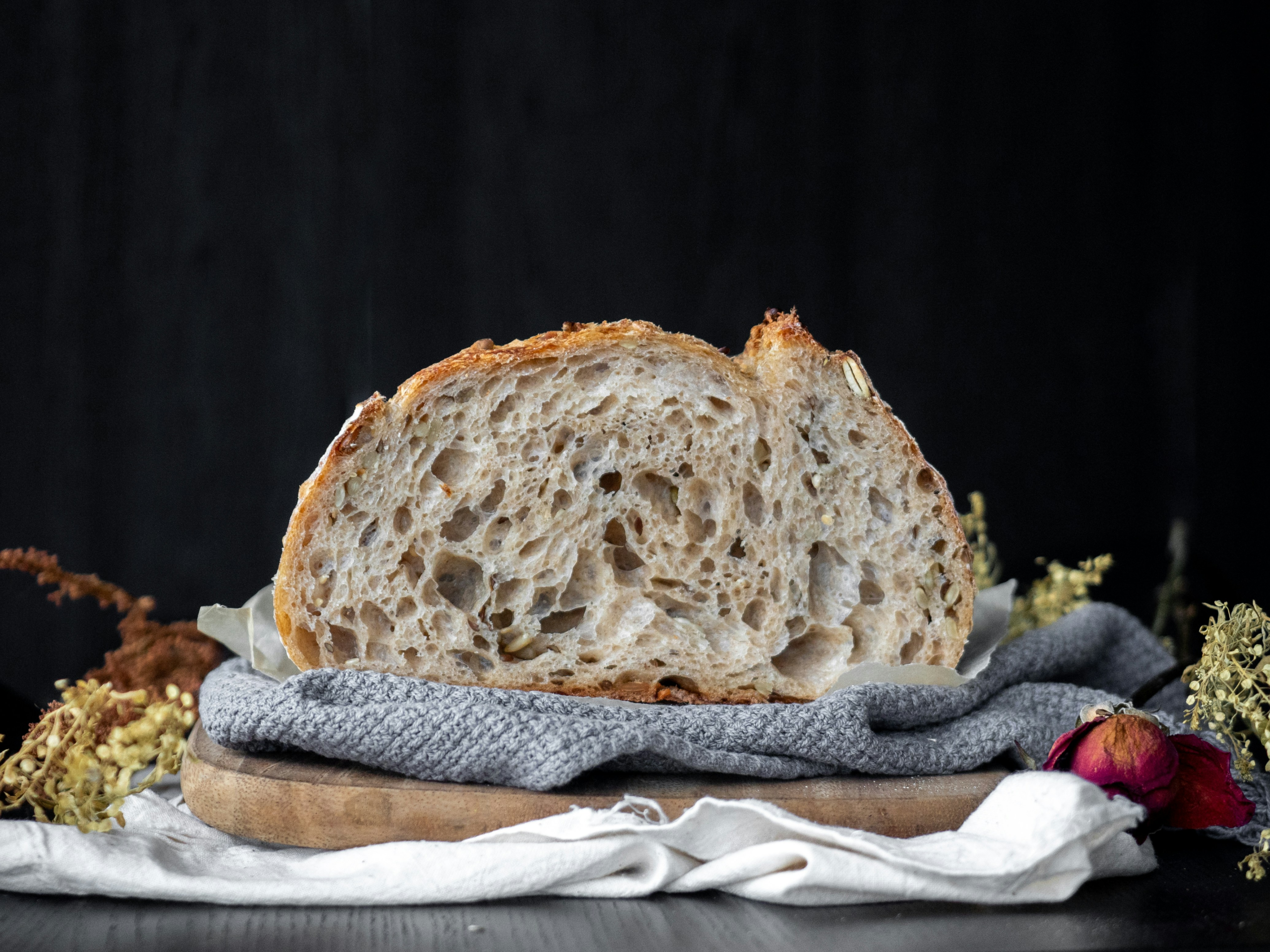
The only real complaint I have about this chapter is that I wish it was longer. I felt like the chapter was over by the time I had a handle on my starter. There were, after all, only eight recipes. But there are some good reasons for that. The book explicitly states that the authors consider the sourdough classes “essentially an extension” of the yeast bread classes. I did not need or want anywhere near as much bread-specific instruction as in the Yeast Breads chapter previously.
From a cookbook-specific perspective, I would happily make any of the recipes in this chapter again. Both of the discard recipes are easy to work into a baking schedule as needed. Or I could look to the King Arthur Baking website and use those same skills on other discard recipes. As far as the breads go, the English Muffins and the Deli Rye Bread have both earned their way into my long-term recipe book.
Even beyond the recipes themselves, I learned a lot. As in the previous chapter, the sidebars encourage experimentation. I found myself using discard in other parts of my baking and playing around with that. At the end of the chapter, I even tried maintaining a stiff culture. That particular experiment did not work. I left to visit family before getting the stiff culture properly established, and it did not survive the refrigerator. Oh, well. I’ll start a new one in the new year. Sourdough is definitely an area in which I would like to learn more and try more recipes, so I will get back into it in a few weeks!
Leave a Reply